
Vol 7 No 1 (2026)

Vol 7 No 1 (2026)
Published: 2026-02-04
Research Article
Pages 327-337
 Efstathia Lefkaditi, Katerina Maniadaki
Aim: The aim of the present research was the investigation of the emotional state of parents of children with Autism Spectrum Disorder (ASD), as well as the quality of their interactions with their children and the quality of the couple's relationship, before and after the implementation of the Cygnet psychoeducational program.
Methods: The sample consisted of 30 pairs of parents of children with ASD aged 4-8 years at functional levels 2 and 3. Twenty pairs (40 parents) participated in the intervention program, while 10 pairs (20 parents) formed the control group. The intervention was implemented in six 2-hour group sessions over a period of six months, followed by a follow-up assessment 18 months later. Data were collected using the General Health Questionnaire (GHQ-28), Parental Stress Index/Short Form (PSI-SF), BDI, SCL-90, Parental Self-Efficacy Scale, Parenting Self-Agency Measure, Barrett-Lennard Relationship Inventory (Form OS-40), Self-Expressiveness in the Family Questionnaire, and a semi-structured interview.
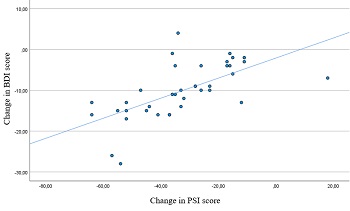
Results: Statistically significant improvements were observed in the intervention group across multiple domains, including reductions in parental stress, anxiety, and depressive symptoms, as well as increases in parental self-efficacy and perceived parental competence. Improvements were also found in the quality of couple relationships, particularly in Respect and Authenticity. All key gains were maintained at the 18-month follow-up.
Conclusion: The findings support the effectiveness of the Cygnet psychoeducational program as a family-centered intervention that reduces parental distress, enhances parental self-efficacy, and strengthens couple relationships. Integrating structured psychoeducational programs into social work and early intervention services may provide a sustainable and equitable support option for families of children with ASD.
