
Digital Technology Use, Self-Reported Digital Literacy, and Emerging AI Practices among Teachers in Nepal: A Descriptive Survey
Article Sidebar
Main Article Content


Abstract
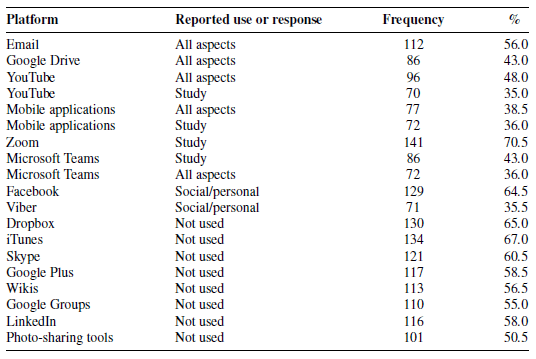
The growing presence of digital technology in education has increased expectations for teachers to use digital tools in their professional and instructional activities. However, access to technology does not necessarily indicate the ability to use it effectively for educational purposes. This study examines patterns of technology use, self-reported digital literacy, and teachers’ perceptions of the importance of information and communication technology (ICT) in Nepal. A descriptive survey design was employed using data from 200 teacher survey records. The data were analysed through frequencies, percentages, means, and standard deviations. The findings indicate that 71% of the respondents reported using the internet for more than one hour daily, while 48% spent more than one hour on screens for academic or professional purposes. Although 89% reported having learned about technology at school, their self-rated digital literacy showed variation, with a mean score of 4.30 (SD = 1.51). Similarly, 98% considered ICT necessary. Email, Google Drive, YouTube, and mobile applications were reported as useful across different areas of life, whereas several other digital platforms were less commonly used. The findings provide a descriptive account of teachers’ engagement with digital technology and their reported experiences of digital learning and emerging AI applications.
Article Details

This work is licensed under a Creative Commons Attribution-NonCommercial 4.0 International License.
References
- Redecker C. European framework for the digital competence of educators: DigCompEdu. Publications Office of the European Union. 2017. https://doi.org/10.2760/159770
- Akram H, Abdelrady AH, Al-Adwan AS, et al. Teachers’ Perceptions of Technology Integration in Teaching-Learning Practices: A Systematic Review. Frontiers in Psychology. 2022, 13. https://doi.org/10.3389/fpsyg.2022.920317
- Scherer R, Siddiq F, Tondeur J. The technology acceptance model (TAM): A meta-analytic structural equation modeling approach to explaining teachers’ adoption of digital technology in education. Computers & Education. 2019, 128: 13-35. https://doi.org/10.1016/j.compedu.2018.09.009
- Holmes W, Tuomi I. State of the art and practice in AI in education. European Journal of Education. 2022, 57(4): 542-570. https://doi.org/10.1111/ejed.12533
- Opesemowo OAG, Ndlovu M. Artificial intelligence in mathematics education: The good, the bad, and the ugly. Journal of Pedagogical Research. Published online June 18, 2024. https://doi.org/10.33902/jpr.202426428
- Sayed Al Mnhrawi DNTA, Alreshidi HA. A systemic approach for implementing AI methods in education during COVID-19 pandemic: higher education in Saudi Arabia. World Journal of Engineering. 2023, 20(5): 808-814. https://doi.org/10.1108/wje-11-2021-0623
- Naudé W. Artificial intelligence vs COVID-19: limitations, constraints and pitfalls. AI & SOCIETY. 2020, 35(3): 761-765. https://doi.org/10.1007/s00146-020-00978-0
- Gómez-Rey P, Angosto S, Alamäki A, et al. Artificial Intelligence and Digital Competencies: An Importance–Performance Analysis of Future Mathematics Teachers’ Perceptions. Education Sciences. 2026, 16(7): 1024. https://doi.org/10.3390/educsci16071024
- Rana K, Rana K. ICT Integration in Teaching and Learning Activities in Higher Education: A Case Study of Nepal's Teacher Education. Malaysian Online Journal of Educational Technology, 2020, 8(1): 36-47. https://doi.org/10.17220/mojet.2020.01.003
- Falloon G. From digital literacy to digital competence: the teacher digital competency (TDC) framework. Educational Technology Research and Development. 2020, 68(5): 2449-2472. https://doi.org/10.1007/s11423-020-09767-4
- Basnet SK, Sharma NP. Teachers’ Practices on Teaching English for Specific Purposes in Technical Education in Nepal. Advances in Educational Research and Evaluation. 2026, 6(1): 362-374. https://doi.org/10.25082/aere.2025.01.005
- Kasneci E, Sessler K, Küchemann S, et al. ChatGPT for good? On opportunities and challenges of large language models for education. Learning and Individual Differences. 2023, 103: 102274. https://doi.org/10.1016/j.lindif.2023.102274
- Wang S, Wang F, Zhu Z, et al. Artificial intelligence in education: A systematic literature review. Expert Systems with Applications. 2024, 252: 124167. https://doi.org/10.1016/j.eswa.2024.124167
- Miao F, Holmes W. Guidance for generative AI in education and research. UNESCO. 2023. https://doi.org/10.54675/EWZM9535
- Scherer R, Teo T. Unpacking teachers’ intentions to integrate technology: A meta-analysis. Educational Research Review. 2019, 27: 90-109. https://doi.org/10.1016/j.edurev.2019.03.001
