
Vol 5 No 1 (2026)

Vol 5 No 1 (2026)
Published: 2026-06-30
Research Article
Pages 361-382
 Mavis Sika Okyere
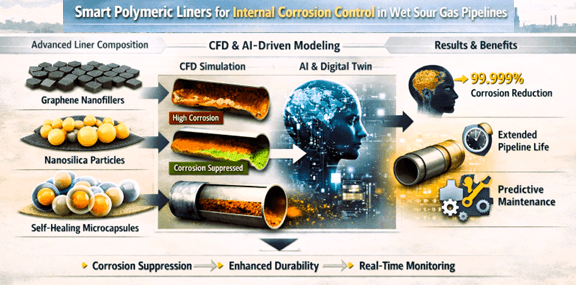
Sour gas pipelines suffer severe integrity challenges due to internal corrosion driven by hydrogen sulfide (H₂S) and carbon dioxide (CO₂). This study introduces a novel smart polymeric liner enhanced with nanostructured graphene and Nano‑silica fillers, integrated into a CFD→AI→digital twin workflow for predictive corrosion control. Unlike conventional inhibitors and coatings, the liner combines Nano-structural impermeability, mechanical reinforcement, and tailored interfacial adhesion strategies to suppress corrosion in API 5L X65 steel pipelines. CFD simulations under synthetic worst‑case conditions produced an upper‑bound corrosion rate of 30.612 mm/year for bare steel. This value is explicitly presented as a theoretical limit to illustrate the severity of unprotected sour service. Under typical industrial operating conditions, predicted rates fall within the 1–5 mm/year range, consistent with field data. Service life predictions are conservatively adjusted to account for liner aging, mechanical wear, and interfacial debonding, yielding a practical range of 20–30 years. An AI regression model trained on CFD outputs and experimental data achieved R² ≈ 0.99, enabling accurate forecasts of corrosion rates and remaining life. Integration into a digital twin framework allows real-time monitoring, predictive maintenance scheduling, and dynamic risk assessment. This work establishes a next-generation material–digital solution for extending the service life of sour gas pipelines.
Pages 340-360
Samuel Tesfaye Molla, Assefa Asmare Tsegaw, Teshome Mulatie Bogale, Addisu Negash Ali, Asmamaw Tegegne Abebe
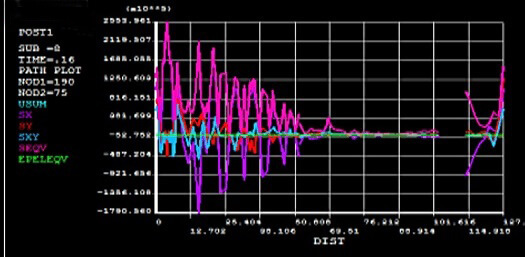
This study presents an integrated computational and experimental study of peel and shear stress distributions in adhesively bonded single-side strap joints (ABSSSJ). These joints comprise a hybrid sisal-glass reinforced HDPE lower adherend and a steel upper adherend for au- tomobile side body panel applications. The study combined fabrication and mechanical (tensile and lap-shear) testing of hybrid composites with different fiber ratios and stacking sequences; parametric Cohesive Zone Model (CZM) based finite-element simulations in ANSYS; and an analytical variational-method (VM) solution for interfacial stress functions to cross-validate nu- merical predictions. Adhesive properties (modulus 1.85–6.0 GPa), adhesive thickness (0.2–1.0 mm) and cohesive fracture toughness (GIC = 25–1.0 kJ·m−2) were varied. Environmental conditioning (moisture exposure 2–10 hr and Temperature 25–45◦C) was included to assess durability effects. Key quantitative findings include that peak peel stress consistently occurs at the free edge of the overlap, while shear stress concentrates at the overlap ends. Increasing adhesive thickness from 0.2 to 1.0 mm reduced the peak peel stress (∼12.3 → 8.7 MPa, ≈ 29% reduction) while producing modest increases in shear strain. The optimal joint performance occurred at an adhesive thickness ≈ 0.5 mm and GIC ≈ 0.75 kJ·m−2. The experimentally measured maximum shear strength of ABSSSJ reached 18.4 MPa (for 0.5 mm adhesive), and the tensile strength for the best stacking sequence (G–S–G) was 62.3 MPa. The CZM–FEM and VM predictions agreed closely with experimental results (deviation ≤ 8%), demonstrating the predictive capability of the combined approach. Moisture and elevated temperature degraded cohesive stiffness and increased the peel stress by 8–15%, underscoring the importance of accounting for environmental effects in design. These results advance both the mechanistic understanding and engineering readiness of recyclable, natural–synthetic hybrid composites for lightweight automotive structures.
Pages 321-339
Zheng Zhang, Dongmei Sun
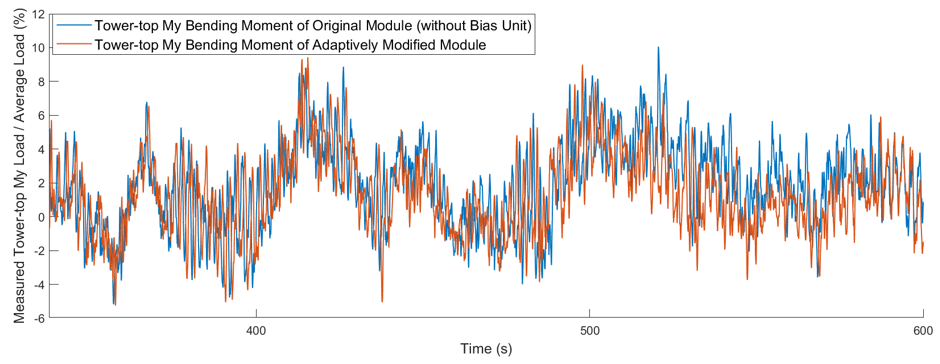
Near the rated wind speed, due to the random variations of wind speed, wind direction, and sea conditions, large-scale floating wind turbines encounter coupled interference between torque control and pitch control. It may result in substantial drops or fluctuations in electrical power. We propose a multi-stage adaptive decoupling control strategy to address the issue of electrical power drops near the full-load operation. It dynamically adjusts the closed-loop input error of PI controllers by correlating the state of the wind turbine with its torque/pitch outputs. The simulation results demonstrate that this strategy can enhance operational stability, significantly increase electrical power generation, and reduce fatigue/extreme loads of key components in large-scale floating wind turbines.
Pages 313-320
Maosheng Zheng, Jie Yu
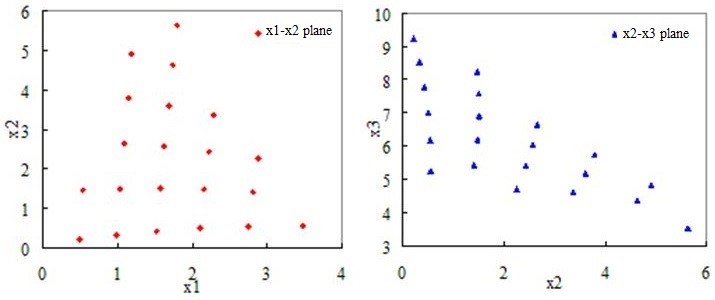
This paper presents the application of probabilistic multi-objective optimization method (PMOO) in enterprise production management, which involves the simultaneous optimization of "high long-term profit target" and "small investment amount". PMOO method is an effective approach to deal with multi-objective optimization problems from the viewpoint of system theory and method of probability theory, in which the new concept of "preferable probability" is introduced to formulate the methodology of PMOO. In PMOO, the evaluated attributes (objectives) of candidates are preliminarily divided into two basic types: beneficial attributes and unbeneficial attributes, and the corresponding quantitative evaluation method of partial preferable probability of each type of attribute is established. Furthermore, the total preferable probability of each candidate alternative is the product of partial preferable probabilities of all possible attributes, and the maximum value of the total preferable probability presents the overall optimization of the system. In the enterprise production management problem of three kinds of products, the objective function is to maximize the long-term profit target and minimize the investment amount, the discretization of Hua's "good lattice point" and uniform mixture design are applied to simplify the optimization process and data processing. Finally, a rational result is obtained.
Pages 291-312
Nicholas Nechval, Gundars Berzins, Konstantin Nechval
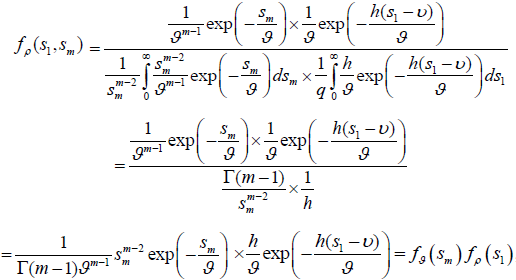
The technique used here emphasizes pivotal quantities and ancillary statistics relevant for obtaining statistical predictive or confidence decisions for anticipated outcomes of applied stochastic models under parametric uncertainty and is applicable whenever the statistical problem is invariant under a group of transformations that acts transitively on the parameter space. It does not require the construction of any tables and is applicable whether the experimental data are complete or Type II censored. The proposed technique is based on a probability transformation and pivotal quantity averaging to solve real-life problems in all areas including engineering, science, industry, automation & robotics, business & finance, medicine and biomedicine. It is conceptually simple and easy to use.
