
Aims and Scope
 Financial Metrics in Business (FMB) (eISSN: 3082-8341) is an open-access, peer-reviewed international journal dedicated to advancing the understanding and application of financial metrics in the global business landscape. The journal serves as a platform for scholars, practitioners, and policymakers to share innovative research, insights, and best practices that bridge the gap between theory and practice in financial measurement and analysis. FMB is committed to fostering a rigorous and collaborative academic environment. By promoting open access, we aim to ensure that our content reaches a global audience, facilitating knowledge exchange and practical applications that drive financial innovation and decision-making in business.
FMB welcomes high-quality, original research articles, reviews, and case studies that explore the development, implementation, and impact of financial metrics across various domains, including but not limited to corporate finance, investment analysis, risk management, financial reporting, sustainability accounting, and performance evaluation. We encourage interdisciplinary approaches that integrate financial metrics with emerging technologies, behavioral finance, and global economic trends.
The journal encompasses a broad range of topics including but not limited to the following areas:
• Corporate Finance Metrics;
• Investment and Portfolio Analysis;
• Risk Management and Financial Stability;
• Financial Reporting and Analysis;
• Emerging Trends and Technologies;
• Global and Cross-Cultural Perspectives;
• etc.
Current Issue
Vol 6 No 1 (2026)
Published: 2026-04-08
Review
Pages 1-11
Company Benefits, Perks, and Their Advantages for Employees: A PRISMA Review
 Belay Getachew Girma
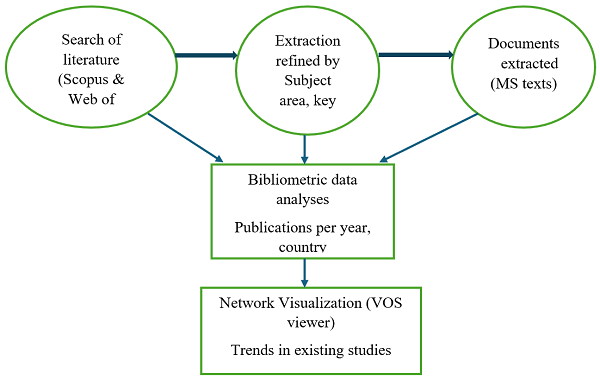
This study presents a systematic literature review conducted in accordance with the PRISMA 2020 protocol and indexed in the Scopus database. Adopting rigorous inclusion and exclusion criteria, a total of 43 publications spanning 2021 to 2025 were selected for analysis. Against the backdrop of volatile business environments and fluctuating consumer demand, organizations are urged to develop enhanced human capital strategies, as negligence in compensation design has been empirically linked to impaired business effectiveness and elevated employee turnover. At present, enterprises offering competitive benefits and perks hold a distinct competitive edge in sustaining market positioning and retaining skilled professional talent. Notwithstanding the growing scholarly attention to employee rewards, existing literature remains limited in empirical evidence regarding whether such benefits and perks are perceived as privileges by employees. To address this critical research gap, the present research synthesized over 40 peer-reviewed journal articles and scholarly publications with time-series data from 2021 to 2025. The findings demonstrate that—with the exception of a small number of leading global firms—most organizations allocate insufficient attention to employee benefits and perks, thereby contributing to severe employee turnover and suboptimal organizational performance. Consequently, this paper advocates for large-scale, cross-national empirical investigations to validate whether employee benefits and perks qualify as privileges, and to examine how transparent compensation policies can generate broader organizational benefits.
| eISSN: 2717-5340 (old) Abbreviation: Financ Metr Bus Editor-in-Chief: Prof. Dr. Hideaki Sakawa(Japan) Publishing Frequency: Continuous publication Article Processing Charges (APC): Click here for more details Publishing Model: Open Access |

