
A Review on Resmetirom: An Oral Thyroid Hormone Receptor-β Agonist for the Treatment of Metabolically dysfunction-Associated Steatohepatitis (MASH)
Article Sidebar
Main Article Content


Abstract
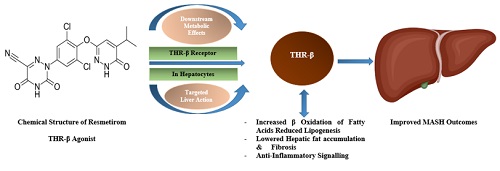
Metabolically dysfunction-associated steatohepatitis (MASH) is a progressive liver condition associated with type 2 diabetes (T2D), obesity, and dyslipidaemia, all of which are components of metabolic syndrome. In 2024, resmetirom, a selective thyroid hormone receptor-β (THR-β) agonist, became the first treatment for non-cirrhotic MASH with mild to advanced fibrosis to receive FDA approval, and in 2025, it was conditionally approved by the European Medicines Agency (EMA) for fibrotic MASH. Resmetirom enhances β-oxidation and lipid metabolism, leading to a reduction in hepatic fat, inflammation, and fibrosis, while minimizing systemic effects on the thyroid or heart. It is intended to be used alongside lifestyle modifications, such as dietary changes and exercise, to optimize patient outcomes. Nevertheless, discrepancies between clinical trial populations and real-world payer criteria reveal access challenges that necessitate policy reform. Effective screening programs rely on educating healthcare providers from various disciplines and establishing consistent standards. Future research should investigate the potential of resmetirom in combination with agents such as GLP-1 receptor agonists, SGLT2 inhibitors, and statins, particularly in light of recent long-term safety data regarding these drug classes and their effects on the thyroid axis. Achieving equitable access will require fair payer endpoints, cost-effectiveness evaluations, and consideration of patient-reported outcomes. Resmetirom signifies a significant advancement in the management of MASH, providing metabolic advantages in conjunction with clinical and lifestyle interventions. Metabolically-dysfunctional-associated steatotic liver disease (MASLD) impacts nearly one-third of adults globally, with 10–30% of cases progressing to MASH or fibrosis, especially in individuals with obesity or type 2 diabetes. Current guidelines endorse resmetirom for non-cirrhotic fibrotic MASH (typically LSM-VCTE 10–20 kPa or MRE 3.1–4.4 kPa), while excluding patients with cirrhosis, active liver disease, substantial alcohol consumption, or untreated thyroid disorders. Monitoring protocols include assessing hepatic safety, thyroid function when necessary, and evaluating response through non-invasive tests and ALT measurements after 6–12 months. Data from the real world indicate a swift adoption of non-invasive eligibility tools, initial enhancements in liver stiffness, and a common concurrent use of GLP-1 receptor agonists, with the response being independent of weight-loss therapies. With the recent approval of semaglutide for fibrotic MASH, determining the optimal integration of resmetirom within treatment algorithms, exploring combination strategies with GLP-1 receptor agonists, and assessing the long-term impacts on liver and cardiometabolic outcomes are essential priorities. This review consolidates the evidence supporting the conditional approval of resmetirom, delineates current clinical guidelines, shares early real-world experiences, and emphasizes the ongoing challenges and future directions in the management of fibrotic MASH.
Article Details

This work is licensed under a Creative Commons Attribution-NonCommercial 4.0 International License.
References
- Huang DQ, Wong VWS, Rinella ME, et al. Metabolic dysfunction-associated steatotic liver disease in adults. Nature Reviews Disease Primers. 2025, 11(1). https://doi.org/10.1038/s41572-025-00599-1
- Mejía-Guzmán JE, Belmont-Hernández RA, Chávez-Tapia NC, et al. Metabolic-Dysfunction-Associated Steatotic Liver Disease: Molecular Mechanisms, Clinical Implications, and Emerging Therapeutic Strategies. International Journal of Molecular Sciences. 2025, 26(7): 2959. https://doi.org/10.3390/ijms26072959
- Miao L, Targher G, Byrne CD, et al. Current status and future trends of the global burden of MASLD. Trends in Endocrinology & Metabolism. 2024, 35(8): 697-707. https://doi.org/10.1016/j.tem.2024.02.007
- Chan W-K, Chuah K-H, Rajaram RB, et al. Metabolic Dysfunction-Associated Steatotic Liver Disease (MASLD): A State-of-the-Art Review. Journal of Obesity & Metabolic Syndrome. 2023, 32(3): 197-213. https://doi.org/10.7570/jomes23052
- Anastasiou G, Stefanakis K, Hill MA, et al. Expanding diagnostic and therapeutic horizons for MASH: Comparison of the latest and conventional therapeutic approaches. Metabolism. 2024, 161: 156044. https://doi.org/10.1016/j.metabol.2024.156044
- Otero Sanchez L, Chen Y, Lassailly G, et al. Exploring the links between types 2 diabetes and liver‐related complications: A comprehensive review. United European Gastroenterology Journal. 2023, 12(2): 240-251. https://doi.org/10.1002/ueg2.12508
- Zhu Y, Cai B. Mechanisms and therapeutic insights into MASH-associated fibrosis. Trends in Endocrinology & Metabolism. 2026, 37(5): 402-417. https://doi.org/10.1016/j.tem.2025.09.004
- Marchesini G, Petta S, Dalle Grave R. Diet, weight loss, and liver health in nonalcoholic fatty liver disease: Pathophysiology, evidence, and practice. Hepatology. 2016, 63(6): 2032-2043. https://doi.org/10.1002/hep.28392
- Zhao Y, Wang L, Zhu S, et al. From Bench to Bedside: Multifunctional Nanoplatforms in the Fight Against Non-alcoholic Fatty Liver Disease. International Journal of Nanomedicine. 2026, Volume 21: 1-25. https://doi.org/10.2147/ijn.s593450
- Fraile JM, Palliyil S, Barelle CJ, et al. Non-Alcoholic Steatohepatitis (NASH) – A Review of a Crowded Clinical Landscape, Driven by a Complex Disease. Drug Design, Development and Therapy. 2021, Volume 15: 3997-4009. https://doi.org/10.2147/dddt.s315724
- Vats K, Alam MM. Translating Trial to Treatment: A Scoping Review of Resmetirom First Year in Real-World Use for Moderate to Advanced Fibrosis in Metabolic Dysfunction-Associated Steatohepatitis. Cureus. Published online August 17, 2025. https://doi.org/10.7759/cureus.90268
- Zeng X, Huang D, Zhu Z, et al. Mechanism-guided drug development and treatment for liver fibrosis: a clinical perspective. Frontiers in Pharmacology. 2025, 16. https://doi.org/10.3389/fphar.2025.1574385
- Elangovan S, Cheah CCM, Goh GB-B. Incretin-based therapies: a new era in metabolic liver disease management. Hepatoma Research. Published online June 2, 2026. https://doi.org/10.20517/2394-5079.2026.15
- Juanola O, Martínez-López S, Francés R, et al. Non-Alcoholic Fatty Liver Disease: Metabolic, Genetic, Epigenetic and Environmental Risk Factors. International Journal of Environmental Research and Public Health. 2021, 18(10): 5227. https://doi.org/10.3390/ijerph18105227
- Stefan N, Yki-Järvinen H, Neuschwander-Tetri BA. Metabolic dysfunction-associated steatotic liver disease: heterogeneous pathomechanisms and effectiveness of metabolism-based treatment. The Lancet Diabetes & Endocrinology. 2025, 13(2): 134-148. https://doi.org/10.1016/s2213-8587(24)00318-8
- Ghazanfar H, Javed N, Qasim A, et al. Metabolic Dysfunction-Associated Steatohepatitis and Progression to Hepatocellular Carcinoma: A Literature Review. Cancers. 2024, 16(6): 1214. https://doi.org/10.3390/cancers16061214
- Bansal SK, Bansal MB. Pathogenesis of MASLD and MASH – role of insulin resistance and lipotoxicity. Alimentary Pharmacology & Therapeutics. 2024, 59(S1). https://doi.org/10.1111/apt.17930
- Tilg H, Adolph TE, Romeo S, et al. The many pathways driving liver inflammation in MASH. Cell Metabolism. 2026, 38(6): 1054-1074. https://doi.org/10.1016/j.cmet.2026.02.018
- Smith K, Dennis KMJH, Hodson L. The ins and outs of liver fat metabolism: The effect of phenotype and diet on risk of intrahepatic triglyceride accumulation. Experimental Physiology. 2025, 110(7): 936-948. https://doi.org/10.1113/ep092001
- Wang B, Wang Y, Zhang J, et al. ROS-induced lipid peroxidation modulates cell death outcome: mechanisms behind apoptosis, autophagy, and ferroptosis. Archives of Toxicology. 2023, 97(6): 1439-1451. https://doi.org/10.1007/s00204-023-03476-6
- Huang W, Meng W, Zhao J, et al. Sterile Inflammation and Cell Death Pathways in Liver Ischemia-Reperfusion Injury: A Review and Perspective. Endocrine, Metabolic & Immune Disorders - Drug Targets. 2025, 26. https://doi.org/10.2174/0118715303401342250514102731
- Zhao S, Guo Y, Yin X. Autophagy, Ferroptosis, Apoptosis and Pyroptosis in Metabolic Dysfunction-Associated Steatotic Liver Disease. Frontiers in Bioscience-Landmark. 2024, 29(1). https://doi.org/10.31083/j.fbl2901030
- Zhang T, Horn P, Peiseler M, et al. Macrophage heterogeneity and plasticity in liver injury and repair mechanisms. Stem Cells. 2025, 44(2). https://doi.org/10.1093/stmcls/sxaf072
- Rolland A, Douard V, Lapaque N. Role of pattern recognition receptors and microbiota-derived ligands in obesity. Frontiers in Microbiomes. 2024, 3. https://doi.org/10.3389/frmbi.2024.1324476
- Di Vincenzo F, Del Gaudio A, Petito V, et al. Gut microbiota, intestinal permeability, and systemic inflammation: a narrative review. Internal and Emergency Medicine. 2023, 19(2): 275-293. https://doi.org/10.1007/s11739-023-03374-w
- Tilg H, Adolph TE, Trauner M. Gut-liver axis: Pathophysiological concepts and clinical implications. Cell Metabolism. 2022, 34(11): 1700-1718. https://doi.org/10.1016/j.cmet.2022.09.017
- Kuchay MS, Choudhary NS, Ramos-Molina B. Pathophysiological underpinnings of metabolic dysfunction-associated steatotic liver disease. American Journal of Physiology-Cell Physiology. 2025, 328(5): C1637-C1666. https://doi.org/10.1152/ajpcell.00951.2024
- Ma J, Ma Y, Wan X, et al. Metabolic and genetic mechanisms of metabolic dysfunction-associated steatotic liver disease: an integrative perspective from molecular pathways to clinical challenges. Frontiers in Endocrinology. 2025, 16. https://doi.org/10.3389/fendo.2025.1639064
- Tao Z, Zhang H, Zuo P, et al. The role of histone methylation in fibrosis and its therapeutic potential. Journal of Translational Medicine. 2026, 24(1). https://doi.org/10.1186/s12967-026-07960-2
- Sandireddy R, Sakthivel S, Gupta P, et al. Systemic impacts of metabolic dysfunction-associated steatotic liver disease (MASLD) and metabolic dysfunction-associated steatohepatitis (MASH) on heart, muscle, and kidney related diseases. Frontiers in Cell and Developmental Biology. 2024, 12. https://doi.org/10.3389/fcell.2024.1433857
- Rajesh Y, Sarkar D. Molecular Mechanisms Regulating Obesity-Associated Hepatocellular Carcinoma. Cancers. 2020, 12(5): 1290. https://doi.org/10.3390/cancers12051290
- Rinella ME, Sookoian S. Therapeutic targets for metabolic dysfunction-associated steatohepatitis: a personalized approach to disease management. Nature Reviews Gastroenterology & Hepatology. 2026, 23(6): 460-474. https://doi.org/10.1038/s41575-026-01187-8
- Baker JS, Supriya R, Dutheil F, et al. Obesity: Treatments, Conceptualizations, and Future Directions for a Growing Problem. Biology. 2022, 11(2): 160. https://doi.org/10.3390/biology11020160
- Van Kleef L, Michel M, Alkhouri N, et al. Resmetirom: An Update on Therapy for Metabolic Dysfunction-Associated Steatohepatitis (MASH). Drug Design, Development and Therapy. 2026, Volume 20: 1-14. https://doi.org/10.2147/dddt.s559331
- Malandris K, Charalampidis K, Loomba R, et al. Pharmacologic Treatment of Metabolic Dysfunction-Associated Steatotic Liver Disease in the Context of Type 2 Diabetes. Current Diabetes Reports. 2026, 26(1). https://doi.org/10.1007/s11892-026-01621-w
- Dahiya K, Palkar M, Sharma S. Unlocking the potential of THR-$beta$ agonist therapies: resmetirom’s chemistry, biology, and patent insights. Naunyn-Schmiedeberg’s Archives of Pharmacology. 2025, 398(8): 9703-9720. https://doi.org/10.1007/s00210-025-03880-y
- Tiwari A, Sharma A, Kumar H, et al. Resmetirom for MASH: A Comprehensive Review of a Novel Therapeutic Frontier. Biomedicines. 2025, 13(9): 2079. https://doi.org/10.3390/biomedicines13092079
- Liu J, Yang F, Gao B, et al. Resmetirom, the first FDA-approved drug for MASH: From drug discovery and action mechanisms to clinical trials. Archives of Pharmacal Research. 2025, 48(11-12): 1299-1313. https://doi.org/10.1007/s12272-025-01574-w
- Polyzos SA, Targher G. Hepatic thyroid hormone receptor-$beta$ signalling: Mechanisms and recent advancements in the treatment of metabolic dysfunction‐associated steatohepatitis. Diabetes, Obesity and Metabolism. 2024, 27(4): 1635-1647. https://doi.org/10.1111/dom.16117
- Madhankumar S, Asma A. Advances in the Pharmacologic Management of MASLD. Gastroenterology Insights. 2026, 17(1): 17. https://doi.org/10.3390/gastroent17010017
- Polyzos SA, Yen PM, Duntas LH. Levothyroxine for Metabolic Dysfunction-Associated Steatohepatitis: It Is the Prime Time for Randomized Controlled Trials. Endocrine Practice. 2026, 32(7): 1170-1173. https://doi.org/10.1016/j.eprac.2026.03.098
- Li J, Chen R, Zhang J, et al. Targeting THR-$beta$ for MASLD Treatment: Current Progression and Emerging Prospects. Journal of Medicinal Chemistry. 2026, 69(2): 823-844. https://doi.org/10.1021/acs.jmedchem.5c03114
- Liang J, Gu Y, Hu L, et al. Discovery of Highly Potent, Selective, and Liver-Targeted THR-$beta$ Agonists for the Treatment of Metabolic Dysfunction-Associated Steatohepatitis. Journal of Medicinal Chemistry. 2025, 68(16): 17457-17472. https://doi.org/10.1021/acs.jmedchem.5c00994
- Kim H, Park C, Kim TH. Targeting Liver X Receptors for the Treatment of Non-Alcoholic Fatty Liver Disease. Cells. 2023, 12(9): 1292. https://doi.org/10.3390/cells12091292
- Chi Y, Jiang H, Yin Y, et al. Macrophage Signaling Pathways in Health and Disease: From Bench to Bedside Applications. MedComm. 2025, 6(7). https://doi.org/10.1002/mco2.70256
- Sethi P, Mishra AK, Ghosh S, et al. Lipid Metabolism–Signaling Crosstalk in Metabolic Disease and Aging: Mechanisms and Therapeutic Targets. Nutrients. 2025, 17(23): 3699. https://doi.org/10.3390/nu17233699
- Zhang X, Zhang K, Wang Y, et al. Sterol Regulatory Element-Binding Proteins and Metabolic Diseases: Mechanisms, Implications, and Therapeutic Strategies. Metabolic Syndrome and Related Disorders. 2026, 24(2): 65-73. https://doi.org/10.1177/15578518251407655
- Miller DM, McCauley KF, Dunham‐Snary KJ. Metabolic Dysfunction‐Associated Steatotic Liver Disease ( MASLD ): Mechanisms, Clinical Implications and Therapeutic Advances. Endocrinology, Diabetes & Metabolism. 2025, 8(6). https://doi.org/10.1002/edm2.70132
- Dobre M-Z, Virgolici B, Dunca-Stefan DCA, et al. Inflammation—Insulin Resistance Crosstalk and the Central Role of Myokines. International Journal of Molecular Sciences. 2025, 27(1): 60. https://doi.org/10.3390/ijms27010060
- Karim G, Bansal MB. Resmetirom: An Orally Administered, Small-molecule, Liver-directed, $beta$-selective THR Agonist for the Treatment of Non-alcoholic Fatty Liver Disease and Non-alcoholic Steatohepatitis. European Endocrinology. 2023, 19(1): 60. https://doi.org/10.17925/ee.2023.19.1.60
- Ezhilarasan D. Thyromimetics and MASLD: Unveiling the Novel Molecules Beyond Resmetirom. Journal of Gastroenterology and Hepatology. 2025, 40(2): 367-378. https://doi.org/10.1111/jgh.16874
- Vaidya VG, Gothwad A, Ganu G, et al. Clinical safety and tolerability evaluation of Withania somnifera (L.) Dunal (Ashwagandha) root extract in healthy human volunteers. Journal of Ayurveda and Integrative Medicine. 2024, 15(1): 100859. https://doi.org/10.1016/j.jaim.2023.100859
- Petta S, Targher G, Romeo S, et al. The first MASH drug therapy on the horizon: Current perspectives of resmetirom. Liver International. 2024, 44(7): 1526-1536. https://doi.org/10.1111/liv.15930
- Guirguis E, Dougherty J, Thornby K, et al. Resmetirom: The First Food and Drug Administration–Approved Medication for Nonalcoholic Steatohepatitis (NASH). Annals of Pharmacotherapy. 2024, 59(2): 162-173. https://doi.org/10.1177/10600280241259528
- Suvarna R, Shetty S, Pappachan JM. Efficacy and safety of Resmetirom, a selective thyroid hormone receptor-$beta$ agonist, in the treatment of metabolic dysfunction-associated steatotic liver disease (MASLD): a systematic review and meta-analysis. Scientific Reports. 2024, 14(1). https://doi.org/10.1038/s41598-024-70242-8
- Gou Z-X, Li N-W, Yao J-Y, et al. Research Progress on Nanoformulations Based on Active Components from Traditional Chinese Medicine for MASLD. International Journal of Nanomedicine. 2026, Volume 21: 1-25. https://doi.org/10.2147/ijn.s597554
- Tiwari R, Mahalpure GS. A Detailed Review of pH and its Applications. Journal of Pharmaceutical and Biopharmaceutical Research. 2025, 6(2): 492-505. https://doi.org/10.25082/jpbr.2024.02.001
- Bence AK, Anderson EB, Halepota MA, et al. Phase I pharmacokinetic studies evaluating single and multiple doses of oral GW572016, a dual EGFR-ErbB2 inhibitor, in healthy subjects. Investigational New Drugs. 2005, 23(1): 39-49. https://doi.org/10.1023/b: drug.0000047104.45929.ea
- Levien TL, Baker DE. Resmetirom. Hospital Pharmacy. 2024, 60(1): 12-20. https://doi.org/10.1177/00185787241278571
- Hennan JK, Camacho RC, Solon E, et al. Pharmacokinetics, mass balance and metabolic profiling of resmetirom in healthy subjects and nonclinical metabolism and disposition. Xenobiotica. Published online June 22, 2026: 1-13. https://doi.org/10.1080/00498254.2026.2687126
- Mahalpure GS, Wagh RD, Mali BJ. A Review On Elagolix Sodium: An Oral Gonadotropin-Releasing Hormone (Gnrh) Receptor Antagonist For Endometriosis Associated Pain. 2022. https://doi.org/10.20959/wjpr20229-24770
- Liu M, Ma Y, San Cheang W, et al. A new liver-targeted agonist of thyroid hormone receptor beta resmetirom in treating MASLD/MASH: From mechanism to therapy. Molecular Therapy. 2026, 34(6): 3192-3216. https://doi.org/10.1016/j.ymthe.2026.04.011
- Hołdrowicz AM, Woźniacka A. The Efficacy and Effectiveness of the Biological Treatment of Pruritus in the Course of Atopic Dermatitis. Journal of Clinical Medicine. 2024, 13(6): 1754. https://doi.org/10.3390/jcm13061754
- Chouik Y, Caussy C, Tacke F. The thyroid-liver axis in MASLD: From metabolic control to clinical translation. Med. 2026, 7(6): 101173. https://doi.org/10.1016/j.medj.2026.101173
- Sarges P, Steinberg JM, Lewis JH. Drug-Induced Liver Injury: Highlights from a Review of the 2015 Literature. Drug Safety. 2016, 39(9): 801-821. https://doi.org/10.1007/s40264-016-0427-8
- Bhushan S, Sohal A, Noureddin M, et al. Resmetirom: the first approved therapy for treating metabolic dysfunction associated steatohepatitis. Expert Opinion on Pharmacotherapy. 2025, 26(6): 663-675. https://doi.org/10.1080/14656566.2025.2478917
- Kanwal F, Bril F, Wong VW-S, et al. Clinical Care Pathway for the Risk Stratification and Management of Patients With Metabolic Dysfunction–Associated Steatotic Liver Disease. Gastroenterology. 2026, 171(1): 164-183. https://doi.org/10.1053/j.gastro.2026.01.047
- Zhou X-D, Lazarus JV, Krittanawong C, et al. Pharmacotherapy for metabolic dysfunction-associated steatohepatitis: heart–liver co-management. The Lancet Gastroenterology & Hepatology. 2026, 11(6): 521-537. https://doi.org/10.1016/s2468-1253(25)00323-1
- Aurinsalo L, Lapatto‐Reiniluoto O, Kurkela M, et al. A Phenotyping Tool for Seven Cytochrome P450 Enzymes and Two Transporters: Application to Examine the Effects of Clopidogrel and Gemfibrozil. Clinical Pharmacology & Therapeutics. 2025, 117(6): 1732-1742. https://doi.org/10.1002/cpt.3610
- Hirota T, Fujita Y, Ieiri I. An updated review of pharmacokinetic drug interactions and pharmacogenetics of statins. Expert Opinion on Drug Metabolism & Toxicology. 2020, 16(9): 809-822. https://doi.org/10.1080/17425255.2020.1801634
- Gallo G, Sarzani R, Cicero AFG, et al. An Expert Opinion on the Role of the Rosuvastatin/Amlodipine Single Pill Fixed Dose Combination in Cardiovascular Prevention. High Blood Pressure & Cardiovascular Prevention. 2023, 30(2): 83-91. https://doi.org/10.1007/s40292-023-00570-9
- Mangia A, Valenti LVC. Safety Choice Drivers of the Coming Treatment Options for Non‐Cirrhotic Metabolic Steatohepatitis. Liver International. 2025, 45(9). https://doi.org/10.1111/liv.70271
- Upadhye KS, Tayade P, Patidar H. Resmetirom: A promising treatment for non-alcoholic steatohepatitis. American Journal of Pharmacotherapy and Pharmaceutical Sciences, 2025, 4. https://doi.org/10.25259/AJPPS_2025_010
- Tiwari R, Mahalpure GS, Mahalpure S, et al. The clinical and regulatory status of NDSRI: A global imperative. Journal of Pharmaceutical and Biopharmaceutical Research. 2024, 6(1): 444-458. https://doi.org/10.25082/jpbr.2024.01.001
- Wong SW, Yang Y-y, Chen H, et al. New advances in novel pharmacotherapeutic candidates for the treatment of metabolic dysfunction-associated steatohepatitis (MASH) between 2022 and 2024. Acta Pharmacologica Sinica. 2025, 46(5): 1145-1155. https://doi.org/10.1038/s41401-024-01466-7
- Fiorucci S, Urbani G, Distrutti E, et al. Obeticholic Acid and Other Farnesoid-X-Receptor (FXR) Agonists in the Treatment of Liver Disorders. Pharmaceuticals. 2025, 18(9): 1424. https://doi.org/10.3390/ph18091424
- Medicines and Healthcare products Regulatory Agency (2026) Resmetirom (Rezdiffra) authorised to treat metabolic dysfunction-associated steatohepatitis (MASH) in adults. Press release. 2026. https://www.gov.uk
- Simental-Mendía LE, Simental-Mendía M, Barragán-Zúñiga LJ, et al. Effect of resmetirom on lipid profile and adiponectin levels. European Journal of Internal Medicine. 2025, 141: 106440. https://doi.org/10.1016/j.ejim.2025.106440
- Raja A, Subhash Sagar R, Saeed S, et al. Safety and efficacy of resmetirom in the treatment of patients with non-alcoholic steatohepatitis and liver fibrosis: a systematic review and meta-analysis. Annals of Medicine & Surgery. 2024, 86(7): 4130-4138. https://doi.org/10.1097/ms9.0000000000002195
- Harrison SA, Bashir MR, Guy CD, et al. Resmetirom (MGL-3196) for the treatment of non-alcoholic steatohepatitis: a multicentre, randomised, double-blind, placebo-controlled, phase 2 trial. The Lancet. 2019, 394(10213): 2012-2024. https://doi.org/10.1016/s0140-6736(19)32517-6
- Shenoy A, Ahmed A, Kim D. Extrahepatic manifestation of metabolic dysfunction-associated steatotic liver disease. Metabolism and Target Organ Damage. 2025, 5(3). https://doi.org/10.20517/mtod.2025.73
- Dennis A, Kelly MD, Fernandes C, et al. Correlations Between MRI Biomarkers PDFF and cT1 With Histopathological Features of Non-Alcoholic Steatohepatitis. Frontiers in Endocrinology. 2021, 11. https://doi.org/10.3389/fendo.2020.575843
- Slaton RM, Iranikhah MG, White CW. Beyond glucagon-like peptide-1: The promise of polyagonists in metabolic dysfunction–associated steatotic liver disease and metabolic dysfunction–associated steatohepatitis—A systematic review of randomized trials. JAPhA Pharmacotherapy. Published online February 2026: 100032. https://doi.org/10.1016/j.japhar.2026.100032
- Papachristos A, Patel J, Vasileiou M, et al. Dose Optimization in Oncology Drug Development: The Emerging Role of Pharmacogenomics, Pharmacokinetics, and Pharmacodynamics. Cancers. 2023, 15(12): 3233. https://doi.org/10.3390/cancers15123233
- Jayakumar S, Middleton MS, Lawitz EJ, et al. Longitudinal correlations between MRE, MRI-PDFF, and liver histology in patients with non-alcoholic steatohepatitis: Analysis of data from a phase II trial of selonsertib. Journal of Hepatology. 2019, 70(1): 133-141. https://doi.org/10.1016/j.jhep.2018.09.024
- Caussy C, Cusi K, Rosenstock J, et al. Relationship Between Metabolic and Histological Responses in People With Metabolic Dysfunction– Associated Steatohepatitis With and Without Type 2 Diabetes: Participant-Level Exploratory Analysis of the SYNERGY-NASH Trial With Tirzepatide. Diabetes Care. 2025, 48(12): 2074-2083. https://doi.org/10.2337/dc25-1306
- Liu C-H, Zeng Q-M, Hu T-Y, et al. Resmetirom and Thyroid Hormone Receptor‐Targeted Treatment for Metabolic Dysfunction‐Associated Steatotic Liver Disease (MASLD). Portal Hypertension & Cirrhosis. 2025, 4(1): 66-78. https://doi.org/10.1002/poh2.100
- Jamal F, Elshaer A, Odeh NB, et al. Resmetirom in the Management of Metabolic Dysfunction-Associated Steatotic Liver Disease and Steatohepatitis. Life. 2025, 15(8): 1306. https://doi.org/10.3390/life15081306
- Harrison SA, Taub R, Neff GW, et al. Resmetirom for nonalcoholic fatty liver disease: a randomized, double-blind, placebo-controlled phase 3 trial. Nature Medicine. 2023, 29(11): 2919-2928. https://doi.org/10.1038/s41591-023-02603-1
- Bittla P, Paidimarri SP, Ayuthu S, et al. Resmetirom: A Systematic Review of the Revolutionizing Approach to Non-alcoholic Steatohepatitis Treatment Focusing on Efficacy, Safety, Cost-Effectiveness, and Impact on Quality of Life. Cureus. Published online September 22, 2024. https://doi.org/10.7759/cureus.69919
- Rodolfi S, Rurale G, Marelli F, et al. Lifestyle Interventions to Tackle Cardiovascular Risk in Thyroid Hormone Signaling Disorders. Nutrients. 2025, 17(13): 2053. https://doi.org/10.3390/nu17132053
- Udaikumar J, Nimmagadda R, Lella VV, et al. The Comparative Safety and Efficacy of Resmetirom and Semaglutide in Patients with Metabolic Dysfunction-Associated Steatotic Liver Disease (MASLD): A Systematic Review. Pharmacoepidemiology. 2025, 4(3): 14. https://doi.org/10.3390/pharma4030014
- Wu X, Xiang Q, Zhang Y, et al. Resmetirom: a first-in-class thyroid hormone receptor $beta$ agonist approved by FDA for patients with nonalcoholic steatohepatitis. Drug Discovery Stories, Volume 2. Published online 2026: 619-632. https://doi.org/10.1016/b978-0-443-33885-4.00026-3
- Kokkorakis M, Boutari C, Hill MA, et al. Resmetirom, the first approved drug for the management of metabolic dysfunction-associated steatohepatitis: Trials, opportunities, and challenges. Metabolism. 2024, 154: 155835. https://doi.org/10.1016/j.metabol.2024.155835
- Harrison SA, Ratziu V, Anstee QM, et al. Design of the phase 3 MAESTRO clinical program to evaluate resmetirom for the treatment of nonalcoholic steatohepatitis. Alimentary Pharmacology & Therapeutics. 2023, 59(1): 51-63. https://doi.org/10.1111/apt.17734
- Hernaez R, Liu Y, Kramer JR, et al. Model for end-stage liver disease-sodium underestimates 90-day mortality risk in patients with acute-on-chronic liver failure. Journal of Hepatology. 2020, 73(6): 1425-1433. https://doi.org/10.1016/j.jhep.2020.06.005
- Chen VL, Morgan TR, Rotman Y, et al. Resmetirom therapy for metabolic dysfunction-associated steatotic liver disease: October 2024 updates to AASLD Practice Guidance. Hepatology. 2024, 81(1): 312-320. https://doi.org/10.1097/hep.0000000000001112
- Keam SJ. Resmetirom: First Approval. Drugs. 2024, 84(6): 729-735. https://doi.org/10.1007/s40265-024-02045-0
- Ravela N, Shackelford P, Blessing N, et al. Early experience with resmetirom to treat metabolic dysfunction–associated steatohepatitis with fibrosis in a real-world setting. Hepatology Communications. 2025, 9(4). https://doi.org/10.1097/hc9.0000000000000670
- Brennan PN, Kopka CJ, Agirre-Garrido L, et al. Reviewing MAESTRO-NASH and the implications for hepatology and health systems in implementation/accessibility of Resmetirom. npj Gut and Liver. 2025, 2(1). https://doi.org/10.1038/s44355-024-00017-5
- Noureddin M, Charlton MR, Harrison SA, et al. Expert Panel Recommendations: Practical Clinical Applications for Initiating and Monitoring Resmetirom in Patients With MASH/NASH and Moderate to Noncirrhotic Advanced Fibrosis. Clinical Gastroenterology and Hepatology. 2024, 22(12): 2367-2377. https://doi.org/10.1016/j.cgh.2024.07.003
- Noormandi A, Bugger H, Aziz F, et al. Targeting Inflammation in Obesity and the Cardiovascular–Kidney–Metabolic (CKM) Syndrome Spectrum: A Narrative Review. Obesity Facts. Published online June 27, 2026: 1-32. https://doi.org/10.1159/000553324
- Fan Y-H, Zhang S, Wang Y, et al. Inter-organ metabolic interaction networks in non-alcoholic fatty liver disease. Frontiers in Endocrinology. 2025, 15. https://doi.org/10.3389/fendo.2024.1494560
- Costa V, Custodio MG, Gefen E, et al. The relevance of the real-world evidence in research, clinical, and regulatory decision making. Frontiers in Public Health. 2025, 13. https://doi.org/10.3389/fpubh.2025.1512429
- Saliba-Gustafsson P, Härdfeldt J, Pedrelli M, et al. Genomic Signatures of MASLD: How Genomics Is Redefining Our Understanding of Metabolic Liver Disease. International Journal of Molecular Sciences. 2025, 26(22): 10881. https://doi.org/10.3390/ijms262210881
- Clayton-Chubb D, Kemp WW, Majeed A, et al. Steatotic Liver Disease in Older Adults: Clinical Implications and Unmet Needs. Nutrients. 2025, 17(13): 2189. https://doi.org/10.3390/nu17132189
- Zaher A, Elsaygh H. Exploring synergistic therapy for metabolic dysfunction-associated steatotic liver disease. Gastroenterology Review. 2025, 20(2): 115-120. https://doi.org/10.5114/pg.2025.151891
- Tsutsumi T, Tang NSY, Ng CH, et al. Comparative efficacy of phase 2–3 therapies for non-cirrhotic metabolic dysfunction-associated steatohepatitis: An updated network meta-analysis. Med. 2026, 7(5): 101077. https://doi.org/10.1016/j.medj.2026.101077
- Kaya E, Yilmaz Y, Alkhouri N. Metabolic dysfunction-associated steatohepatitis treatment: spotlight on the latest hepatoprotective drugs. Expert Opinion on Pharmacotherapy. 2025, 26(14-15): 1589-1598. https://doi.org/10.1080/14656566.2025.2566258
- Cobbold JF, Miller H, Hallsworth K, et al. The use of pharmacotherapies in non-cirrhotic metabolic dysfunction-associated steatohepatitis: a UK expert consensus. The Lancet Gastroenterology & Hepatology. 2026, 11(7): 616-626. https://doi.org/10.1016/s2468-1253(26)00077-4
- Ezz-Eldin YM, Azouz AA, Khalaf MM, et al. Unveiling MASH: a comprehensive review highlighting experimental insights, molecular pathogenesis, and therapeutic approaches. Immunopharmacology and Immunotoxicology. 2026, 48(2): 321-340. https://doi.org/10.1080/08923973.2026.2638333
- Vettor R, Petroni ML, Dotan I, et al. Overcoming the barriers in the screening, diagnosis, and follow-up of patients with metabolic dysfunction–associated steatotic liver disease (MASLD) and metabolic dysfunction–associated steatohepatitis (MASH). Reviews in Endocrine and Metabolic Disorders. 2026, 27(2): 213-235. https://doi.org/10.1007/s11154-026-10027-8
- Gkrinia EMM, Belančić A, Stević I, et al. Pharmacoeconomics of high-cost therapies: real world challenges. Expert Review of Pharmacoeconomics & Outcomes Research. Published online June 22, 2026: 1-16. https://doi.org/10.1080/14737167.2026.2691186
